Is this voluntary or compulsory?+
The long-term ambition is compulsory: an internationally coordinated, legally binding framework introduced through democratic legislation. That obligation does not exist today. The starting point is public support, independent expert review and a voluntary pilot to test whether the mechanism works.
Why 0.8%?+
0.8% is the founder's current proposal — small enough to leave 99.2% of net wealth in place before other changes, and large enough to matter at very high wealth levels. It replaces older illustrative rates in early materials. The right rate must be tested by independent economists.
Who would qualify as very wealthy?+
Not yet decided. The threshold would be set very high, so that only a small share of the population is affected. Where to set it, and how to treat families, trusts and residency, requires independent assessment.
Would patrons own the art?+
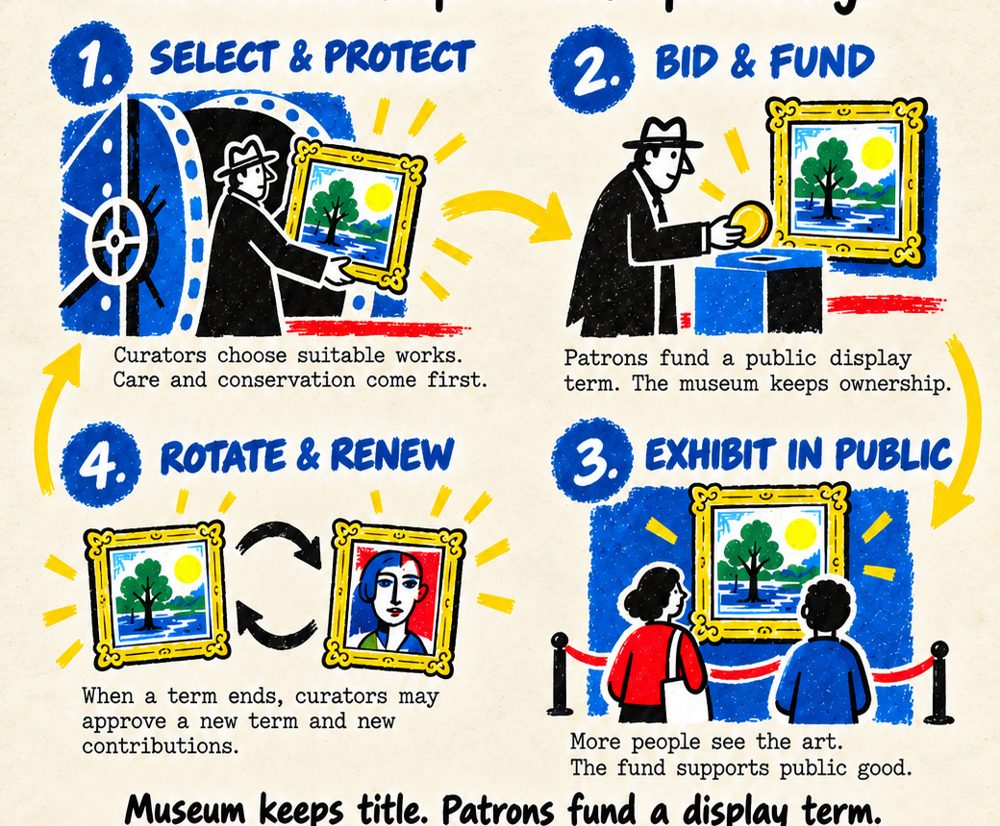
It depends on the route. Under public stewardship, no — the museum keeps ownership and curatorial control, and the patron funds a public display term. Under the purchase route, a buyer could own an eligible work where the owner consents and the sale is legally and ethically permitted.
Can museums legally sell their collections?+
Often not, or only under strict conditions. Many public collections are protected by law, and professional codes restrict how sale proceeds may be used. That is why stewardship is the preferred route for museum collections. Any sale would need the owner's consent and the relevant approvals.
Why connect humanitarian funding to art?+
Art gives the idea a visible, positive form. A contribution that also brings hidden works into public view creates shared cultural value and a public moment of recognition. But the humanitarian payment is always separately identified — the art is not the funding source on its own.
How much money could this raise?+
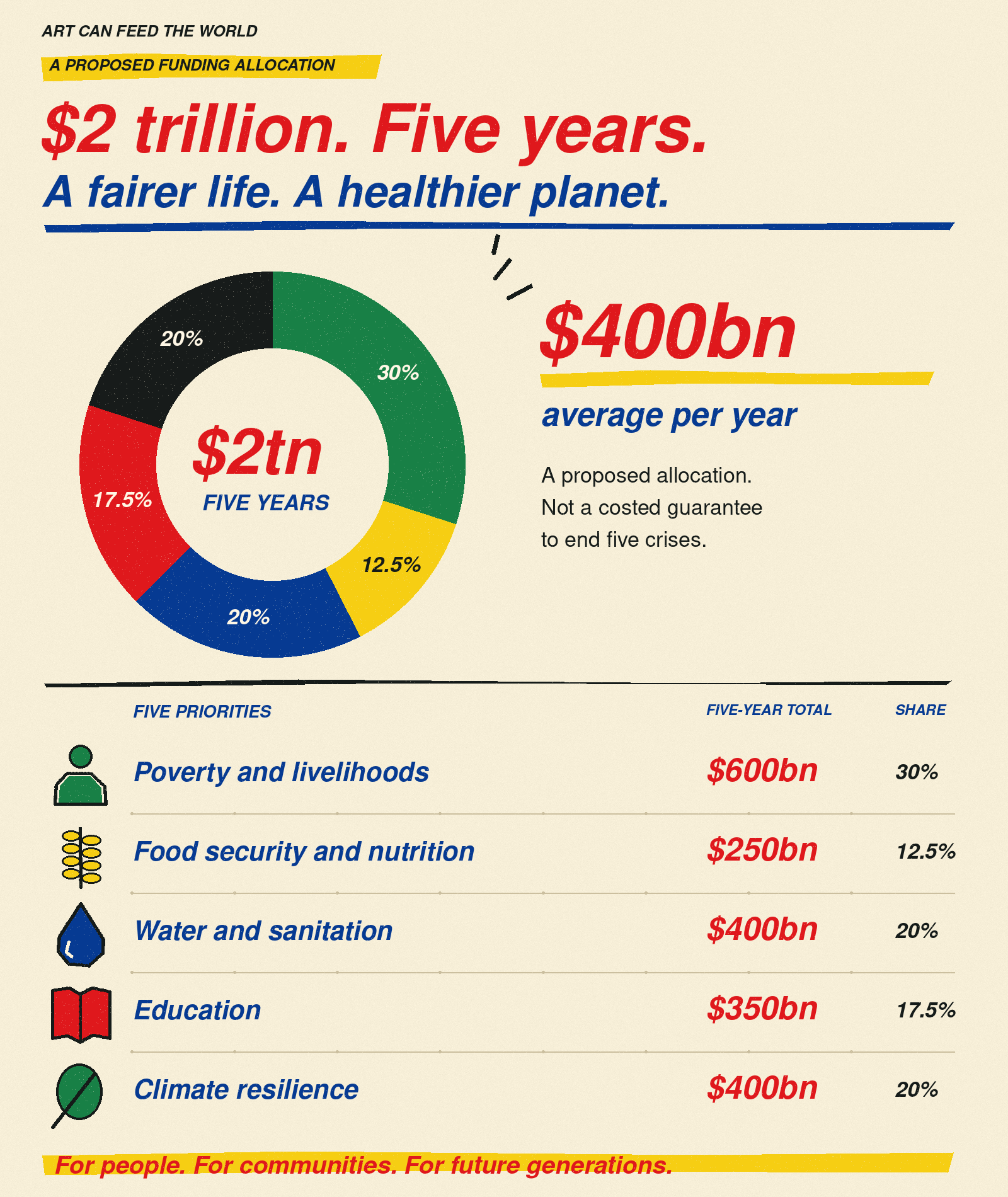
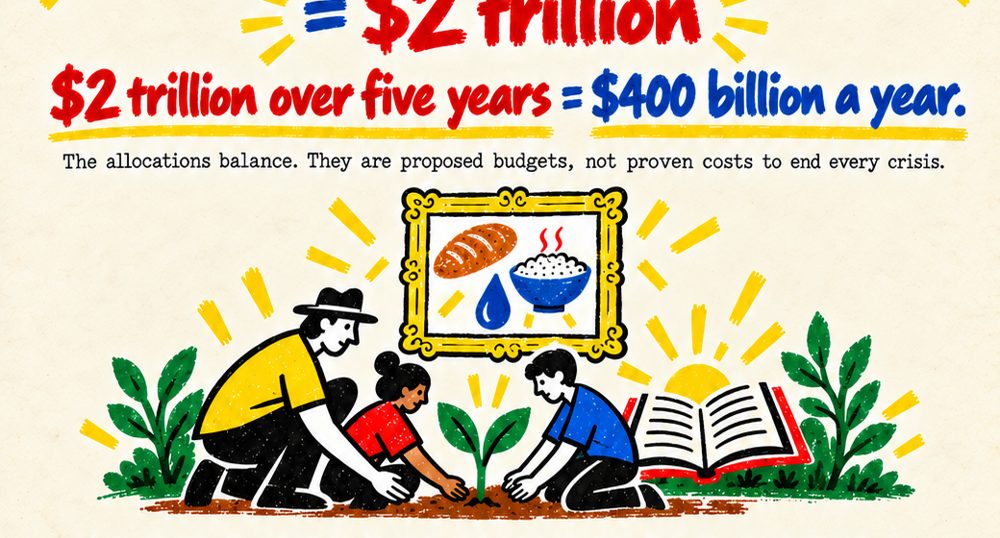
Nobody knows yet. It depends on the threshold, the verified wealth base, valuation, avoidance and collection rates. Early materials mention a full-scale ambition of $400 billion a year; that is a proposed target requiring independent modelling, not a forecast and not money raised. The calculator on this site shows arithmetic only.
What if a fortune is held in businesses rather than cash?+
This is a real design question. Options could include payment over time, payment in shares, or deferral rules, so that contributors are not forced into damaging sales. Independent tax and legal experts need to test these options.
Who decides how the money is spent?+
The proposal is an independently governed fund that includes people from recipient communities. Contributors would not control grants. Funding decisions would follow published criteria and evidence of effectiveness.
Could this become reputation laundering?+
It could, without safeguards. That is why the proposal includes source-of-funds checks, transparent eligibility rules, no donor influence over grants or museum interpretation, and public reporting. Recognition must follow verified contribution, not replace accountability.
Will this end poverty and hunger?+
Ending poverty and hunger is the mission. Money alone cannot do it: it must work alongside effective institutions, good policy and local leadership. We will not translate amounts into meals or lives saved without a documented methodology.
How can I help now?+
Join the conversation below, share the idea, and — if you are an expert, a museum, a collector or a humanitarian organisation — tell us how you could help test it.